Active mission

Curiosity

The rover that proved ancient Mars could have supported life, still climbing a Martian mountain.

Image: NASA/JPL-Caltech/MSSS

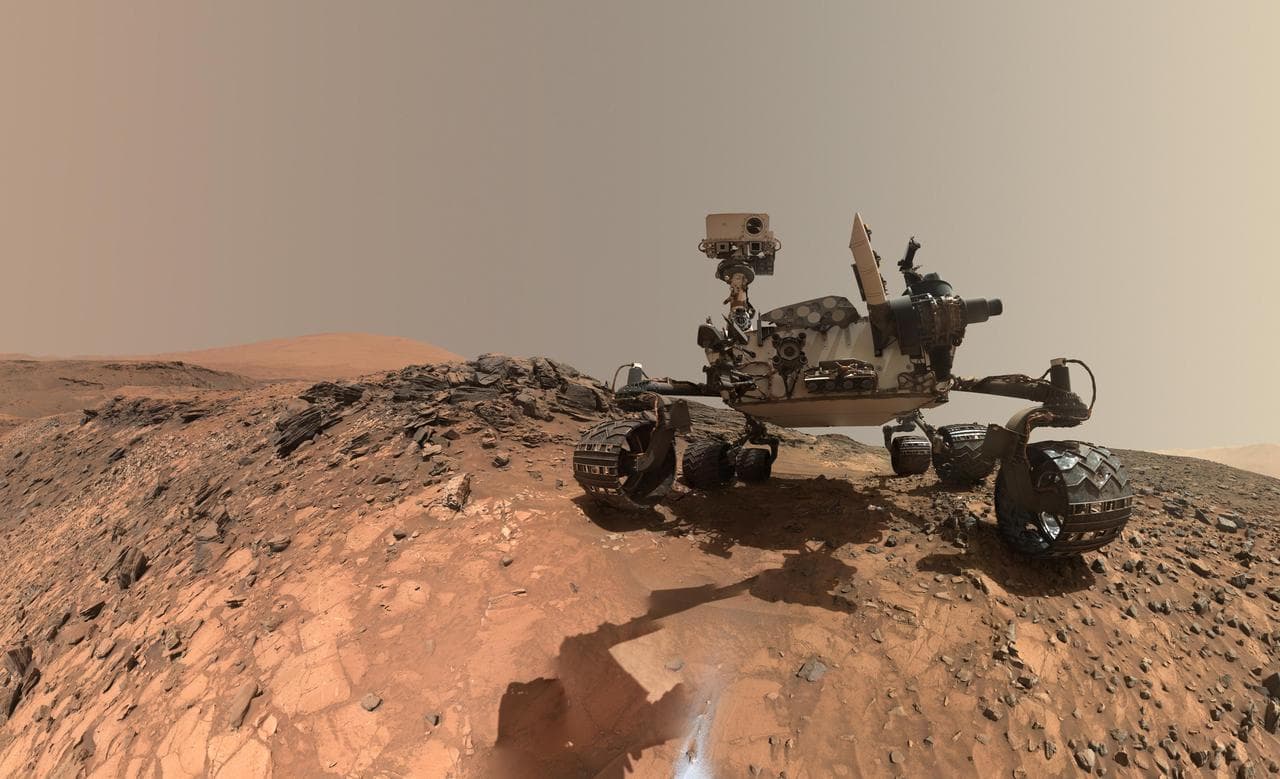
Curiosity is a car-sized, nuclear-powered rover that landed in Gale Crater in 2012 using the then-untested sky-crane maneuver. Its formal name is the Mars Science Laboratory, and it carries a full geochemistry lab: drills, ovens, spectrometers, and a laser that vaporizes rock from 20 feet away.

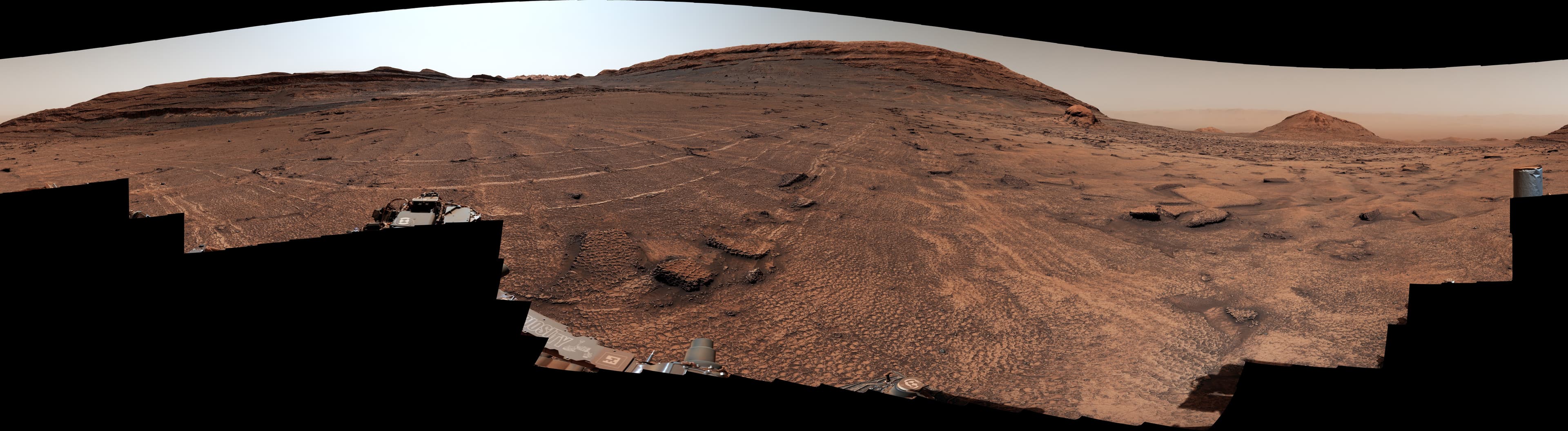
Since 2014 it has been climbing Mount Sharp, a 3-mile-high mound of layered sediment in the crater's center. Each layer is a page of Martian climate history, read in order as the rover ascends.

Curiosity settled the biggest question about early Mars: yes, it was habitable. It found an ancient lakebed with liquid water, key chemical ingredients for life, and organic molecules preserved in rock. Perseverance's hunt for actual biosignatures builds directly on that foundation.

Key Facts

Landed
August 6, 2012, Gale Crater
Power
Radioisotope generator (plutonium)
Size
About 1 ton, car-sized
Key finding
Ancient Mars was habitable
Current work
Climbing Mount Sharp's sediment layers

Timeline

  1. November 2011

    Launch from Cape Canaveral

  2. August 2012

    Sky-crane landing in Gale Crater, 'seven minutes of terror'

  3. 2013

    Drilled samples confirm an ancient habitable lake

  4. 2014

    Reaches the base of Mount Sharp

  5. Next up

    Continued ascent through younger rock layers

Latest Curiosity News
Covered byNASANASA News
Curiosity Sees Martian Sulfur Up Close
NASANASAJul 9, 2026

Curiosity Sees Martian Sulfur Up Close

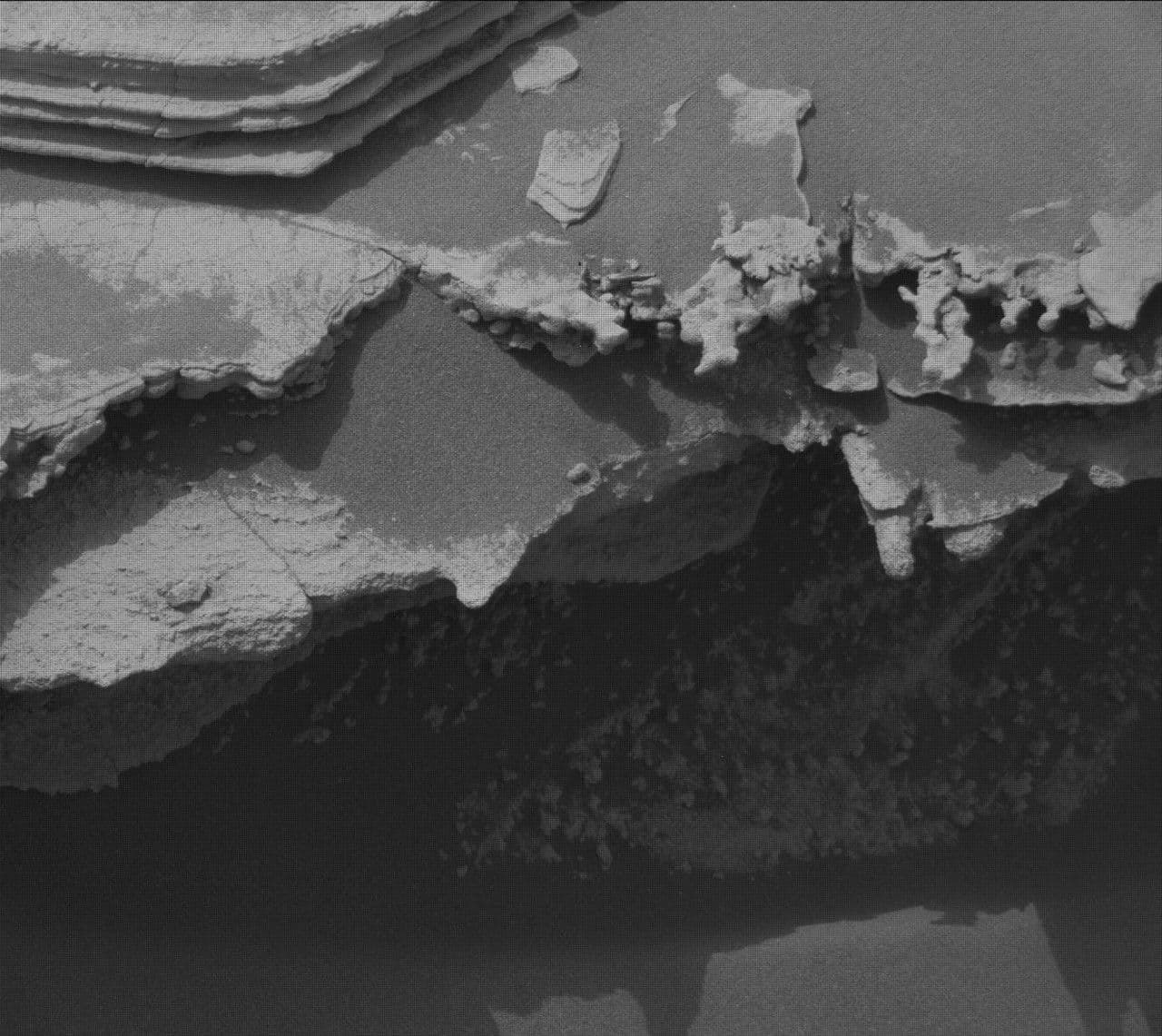
This close-up view shows fragments of sulfur crystals — the first ever seen on the Red Planet. The crystals were found after NASA’s Curiosity Mars rover happened to drive over a rock and crush it on May 30, 2024. Several

Curiosity
The rover that proved ancient Mars could have supported life, still climbing a Martian mountain. Learn more →
Curiosity Blog, Sols 4934-4940: In the Land of the Polygons
NASANASAJul 1, 2026

Curiosity Blog, Sols 4934-4940: In the Land of the Polygons

Written by William Farrand, Senior Research Scientist, Space Science Institute Earth planning date: Friday, June 26, 2026 There were two planning cycles over this span of sols. The Monday planning took place with Curiosi

Curiosity
The rover that proved ancient Mars could have supported life, still climbing a Martian mountain. Learn more →
Curiosity Blog, Sols 4927–4933: Let’s Drive to That Smooth Area
NASANASAJun 24, 2026

Curiosity Blog, Sols 4927–4933: Let’s Drive to That Smooth Area

By Susanne P. Schwenzer, Professor of Planetary Mineralogy at The Open University, UK Earth planning date: Thursday, June 18, 2026 In the area Curiosity is currently exploring, the science team has mapped several areas w

Curiosity
The rover that proved ancient Mars could have supported life, still climbing a Martian mountain. Learn more →
Curiosity Blog, Sols 4920-4926: Surveying the Bands
NASANASAJun 19, 2026

Curiosity Blog, Sols 4920-4926: Surveying the Bands

Written by William Farrand, Senior Research Scientist, Space Science Institute Earth planning date: Friday, June 12, 2026 Rather than going from stage to stage at a music festival to hear different bands playing differen

Curiosity
The rover that proved ancient Mars could have supported life, still climbing a Martian mountain. Learn more →
Curiosity Blog: Sols 4913-4919: Planetary explorers, freewheeling to the Yardang unit!
NASANASAJun 10, 2026

Curiosity Blog: Sols 4913-4919: Planetary explorers, freewheeling to the Yardang unit!

Written by Catherine O’Connell-Cooper, APXS Strategic Planner and Payload Uplink/Downlink Lead, University of New Brunswick, Canada Earth planning day: Friday, June 5th, 2026 In a very broad sense, Curiosity has two mode

Curiosity
The rover that proved ancient Mars could have supported life, still climbing a Martian mountain. Learn more →
NASA’s Perseverance, Curiosity Panoramas Capture Two Sides of Mars
NASANASA NewsApr 27, 2026

NASA’s Perseverance, Curiosity Panoramas Capture Two Sides of Mars

NASA’s Curiosity and Perseverance rovers have captured two 360-degree landscapes that highlight how the missions are revealing details of the Red Planet’s formation, watery past, and potential for life. Located 2,345 mil

Perseverance
NASA's newest Mars rover, hunting for signs of ancient life and caching samples for return to Earth. Learn more →
Curiosity
The rover that proved ancient Mars could have supported life, still climbing a Martian mountain. Learn more →
NASA’s Curiosity Finds Organic Molecules Never Seen Before on Mars
NASANASA NewsApr 21, 2026

NASA’s Curiosity Finds Organic Molecules Never Seen Before on Mars

After years of lab work, the results are in: A rock that NASA’s Curiosity Mars rover drilled and analyzed in 2020 includes the most diverse collection of organic molecules ever found on the Red Planet. Of the 21 carbon-c

Curiosity
The rover that proved ancient Mars could have supported life, still climbing a Martian mountain. Learn more →

Facts last reviewed 2026-07-11. Official mission page: science.nasa.gov